
Featured on The Guardian
This article is republished from The Guardian (print and online), “How tech and strategic measures are transforming sustainability in the freight industry,” published in July 2026 as part of Amazon Freight’s four-part series.
A mix of AI technology, electric trucks, rail and sea transport, and renewable power can help freight businesses reduce waste, lower emissions and build a more sustainable network
No magic bullet will make the famously carbon-intensive logistics sector more sustainable, says James Moulds, sustainable logistics lead, Amazon Freight.
Instead, there are a series of actions that industry players can take to cut waste, save fuel, reduce congestion and promote low-carbon energy. This “broad portfolio approach” will make a significant impact on their emissions, help them reach targets and keep their environmental responsibilities front and centre.
The main lever is reducing the number of empty trucks on the roads – otherwise known as “empty running”.
“That’s obviously not good for the environment,” says Moulds. “By using advanced network optimisation technology, we’re constantly maximising the share of loads and minimising empty running to eliminate one of the biggest waste sources in freight.”
Network optimisation innovations include AI forecasting and scheduling tools, plus data feeds with real-time updates for external factors such as weather events, road conditions and port congestion.
A focus on intermodal logistics to reduce carbon emissions
The organisation also mixes transportation methods to be more sustainable where possible, such as combining road transport with rail transport, or road with sea (last year, Amazon transported more than 170 million packages by sea and rail). This has reduced logistics-related CO2 emissions by almost 50%, compared to pure road haulage.
“We’re now operating over 500 sea or rail routes across Europe,” says Moulds. “That means our shipping customers can easily access a lower-carbon network without having to build it themselves.”
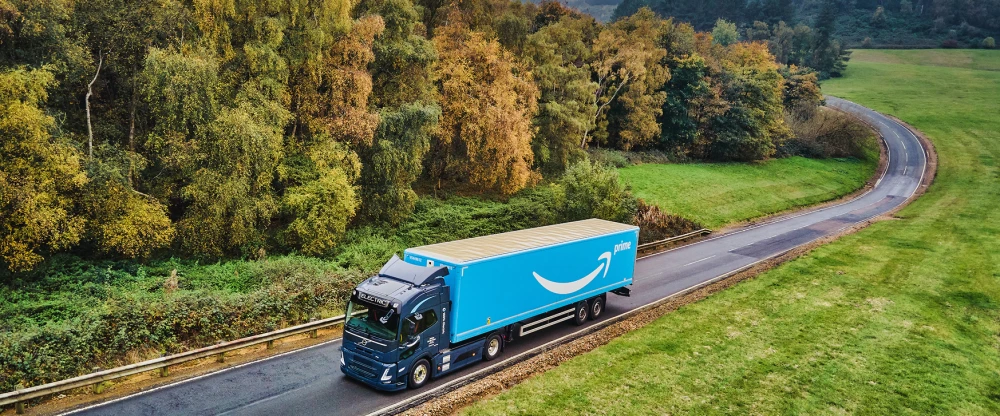
Another key area is fleet electrification. In January 2025, as part of a €1bn investment to decarbonise its European transport network, it placed its largest-ever order for electric trucks.
Amazon now has more than 100 electric heavy trucks operational in its transportation network across Europe, and is on track to more than double its fleet in Europe by the end of 2026. When fully operational this European EV fleet will travel more than 900,000 miles per year.
“We’ll be doing more than just delivering with these vehicles,” says Moulds. “We’re also installing charging infrastructure at different fulfilment centres, which we’ll operate ourselves.”
All these measures are crucial if the company is to meet its ambitious goal of achieving net zero carbon across its operations by 2040. Yet more needs to be done, says Moulds.
“We’ve become the largest corporate purchaser of carbon-free energy in Europe,” he says. “We have invested in over 260 projects across the continent that will provide more than 10 gigawatts of electricity. This includes more than 120 onsite solar arrays at different facilities used to power our operations.”
The organisation is also committed to using low-carbon fuels and has more than 700 compressed natural gas (CNG) trucks on the road in Europe. In addition, it has instigated various initiatives to reduce packaging in orders, which have helped avoid more than 4m metric tons of packaging globally since 2015.
Careful planning and collaboration with industry partners
Navigating the complexity of intermodal freight requires fiendishly careful planning. “That comes back to using technology and AI to track loads, give shippers real-time visibility and mitigate disruptions,” says Moulds.
Intermodal logistics also involves more partners, so Amazon Freight is working closely with them to optimise operations – and with the industry generally. “We recently joined the Combined Transport for Europe campaign, which brings together different players in the sector, highlights the challenges we’re facing and fosters collaboration,” says Moulds.
Ultimately, the business isn’t implementing its sustainability measures just because it’s the right thing to do. “We see clear and consistent demand signals from our shippers who have their own net zero targets,” says Moulds. “We’re committed to it. Building a more sustainable network is a long-term strategic area of focus for us.”
Explore the full series
This is one of four conversations in a series on theguardian.com, where Amazon Freight leaders open up about the people, technology, and thinking behind a freight network built around shippers, and how it stays reliable, even under pressure. Chris Roe, MD of Amazon Freight EU, explains why the human touch is the beating heart of the logistics sector. Amy Reeve, Head of Mass Shipper Management and Demand Generation, explains how leading logistics networks stay reliable under pressure. Samantha van Putten, Head of Billing and Payments and Strategic Programmes, looks at how technology, including AI, is transforming the future of logistics.
Create your free shipper account
If you are ready to put a reliable freight network to work for your business, Amazon Freight gives you a simple way to plan and book loads with the visibility, dependable delivery, and real support these conversations describe. Create your free shipper account today to get started.


